
Analysis by Amina Banu & Shaninomi Eribo
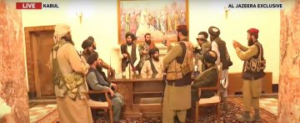
On August 15th, after an almost 20 year sojourn, the loss of over 240,000 lives, and over $2 Trillion in expenses, America’s war in Afghanistan came to a shocking end when the Taliban literally strolled into the nation’s capital and took control of the presidential palace without firing a single shot.
Hours earlier, President Ashraf Ghani had fled the country to an unknown destination claiming that his exit was necessary to avoid bloodshed. Up until his departure however, he had been providing assurances to the Afghan people that the nation’s capital could not be taken by the Taliban, providing a false sense of security to residents of Kabul.
That false sense of security was completely shattered when news of his departure began to circulate alongside images of Taliban fighters brandishing guns inside the presidential palace.
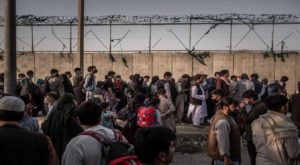
Naturally, chaos ensued. At Hamid Karzai international airport, there were eyewitness accounts of staff abandoning their desks and people running to planes. Queues began to build at ATM’s and banks as residents sought to withdraw what cash they had for obvious reasons including having the resources needed to purchase plane tickets out of Kabul.
The US abandoned its embassy and moved all of its staff to the airport with its military personnel taking over air traffic control in order to evacuate American and allied personnel from the country. The United Kingdom and other allied partners also followed suit.
In the days that followed, the world watched transfixed as scenes of chaos were steadily broadcast from the airport. There were images of Afghan men, women and children running alongside and holding on to the undercarriage of a US C-17 military aircraft as it taxied along the runway for take-off. In one particularly tragic case, a young Afghan footballer fell hundreds of feet to his death from the US aircraft he had been clinging to.
Almost two weeks later on August 27th in what would be the deadliest day for US forces in over a decade, as well as the first American service members killed in Afghanistan since February 2020, a suicide bomb detonated near the Abbey gate of the airport killing 13 US service members and injuring 18. A second suicide bomb was also detonated at the Baron hotel. So far, over 170 Afghan’s, many of them women and children are reported to have died from the twin blasts with the total tally expected to take some more time to confirm.
President Biden vowed revenge on the perpetrators of the attack saying America would never forgive, nor forget. ISIS-K, who happen to be sworn enemies of the Taliban, claimed responsibility for the attack. Warnings of further attacks have also been issued by US intelligence services.
How did America and its allies get the Afghan exit so wrong?
Suffice it to say, that in no one’s wildest dreams could it have been imagined that America’s time in Afghanistan would end in such a mess with thousands of Afghan’s who had worked in different capacities in support of the mission of US and allied troops, being left behind to an uncertain fate with the Taliban.
In the UK house of commons, MPs on all sides accused Boris Johnson of Afghanistan failures.
As former Prime Minister of the UK, Theresa May put it during the heated session in the house of commons on August 18th following the collapse of the Afghan government:
‘Was our intelligence really so poor? Was our understanding of the Afghan Government so weak? Was our knowledge of the position on the ground so inadequate? Did we really believe that, or did we just feel that we had to follow the United States and hope that, on a wing and a prayer, it would be all right on the night?’
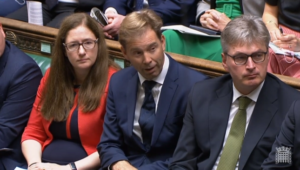
Keir Starmer, leader of the opposition Labour party was also equally if not more critical of the current Prime Minister; Boris Johnson, pointing out that ‘there has been a major miscalculation of the resilience of the Afghan forces and staggering complacency from our Government about the Taliban threat’. He went on to add that ‘The lack of planning is unforgivable, and the Prime Minister bears a heavy responsibility’.
Boris Johnson notably walked out of the session in the middle of Theresa May’s speech.
In the US, president Biden similarly faced stinging criticism of his plan to withdraw all US forces from Afghanistan by August 31, as well as the fallout. As early as July 14, former President George Bush – for whom there is global consensus on his responsibility for the biggest foreign policy catastrophes in US history with the disastrous invasions of both Iraq and Afghanistan – told a German broadcaster that ‘I think the consequences are going to be unbelievably bad’ adding that ‘Afghan women and girls are going to suffer unspeakable harm’.
There have been criticisms from others both within Biden’s Democratic party as well as the Republican party led by the US house minority leader; Kevin McCarthy, with former President Donald Trump predictably taking the opportunity to take a swipe at his successor. However, President Biden has remained resolute in his decision to withdraw US forces and end the mission in Afghanistan echoing the words of former president George Bush made weeks before the U.S. military began fighting in Afghanistan in which he said “This conflict was begun on the ‘timing’ and terms of others; it will end in a ‘way’ and at an hour of our choosing.”
While most do not necessarily question the ‘timing’ of the end of the mission in Afghanistan with US opinion polls showing up to 70% public support across partisan lines for President Biden’s decision with many having argued for the mission to have ended much sooner, the ‘way’ in which the mission is ending has raised almost universal criticism.
Given a multitude of factors including the fact that the Taliban had steadily began taking more territory from August 6th eventually controlling more than it initially held before the US invasion; that the Afghan central government really had no influence outside of Kabul and a few other provincial capitals; that corruption had stripped away much of the pay, money and support of Afghan forces; as well as the fact that the central government was totally left out of negotiations for a peace deal between the US (led by former President Trump) and the Taliban which was signed in February 2020, it really beggars belief that the swift collapse of the Afghan government was not envisaged by US and allied intelligence agencies and a more carefully orchestrated and coordinated exit plan not put in place.
Many struggle to understand why the lives of thousands of US and allied military and civilian personnel, as well as thousands of Afghans were put at risk in such a manner and why it appears that US and allied forces are practically bolting tail between legs out of Afghanistan in such a disorderly and chaotic manner. Surely there must have been a better way to do this?
But perhaps as Simon Jenkins, a columnist with the British Guardian newspaper put it in a recent article, ‘The west’s nation-building fantasy is to blame for the mess in Afghanistan’.
In the article, Jenkins argues that:
‘American gunboat diplomacy, initially supposed to salve the wounds of 9/11 in 2001, opened the door to fake morality and a trillion-dollar nation-building fantasy. The catastrophic return of Taliban autonomy became its inevitable conclusion. The US – with Britain as its lackey – committed liberal interventionism’s cardinal sin: half-heartedness. The craving to intervene is always followed by a craving to withdraw. Traditional empires at least pretended they would never leave. As it was, Afghanistan replicated departures from India, South Africa, Hong Kong and Iraq. If you invade and conquer an alien state, you own it, but must then disown it. Western rule has killed an estimated 240,000 in Afghanistan since 2001, more than the Taliban ever did. It has not left morality, just a mess’.
Arguably, America’s humiliating defeat in Afghanistan has severe implications on its quest to spread freedom and democracy around the world including in Africa where democratic institutions remain notably weak.
What the future portends.
The hard-won freedoms for women and girls are at serious risk if the actions of the Taliban in the days leading up to and following the collapse of the Afghan central government are anything to go by. There have been reports of women who had been working as news anchors, bankers and teachers being told to stay home and put forward any of their male relatives in their place.
The streets of Kabul were markedly free of female pedestrians in the days following the takeover of the Taliban, perhaps in keeping with the Taliban’s strict interpretation of and enforcement of Sharia law under which women are never to be allowed out of their homes alone unless escorted by male relatives.
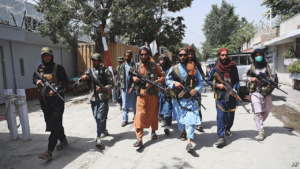
The fate of those who supported US and allied forces in one manner or the other but who have now been left behind due to the inability of US and allied forces to get them out remains uncertain in the hands of the Taliban. For the most part, they feel mostly betrayed and it is this elevated sense of betrayal that perceived enemies of the West such as Russia and China are latching on to make the point about the futility and illusion of relying on the West.
For instance, China’s propaganda mouthpiece the Global Times has warned Taiwan that once warfare breaks out, the Island’s defences will “collapse in hours” as the US will not offer support. Andrew Yang, a former Taiwanese defence minister, agrees that the withdrawal from Afghanistan matters to Taiwan: “That is a lesson to learn…Taiwan should depend on its own self-defences instead of US support.”
In India, many officials are troubled by a victory for Pakistan’s proxy, and the prospect of energized jihadism. And having aligned the country more closely with America against China, they are taken aback by America’s apparent unreliability. “The us withdrawal…showed utter disregard of what it would unleash in its wake,” argues Nirupama Rao, formerly India’s most senior diplomat. “It has devalued the worth and credibility of American power in the region,” she says.
On their own part, Russian diplomats praised the Taliban over the “puppet government” of Ashraf Ghani, the president who fled Afghanistan and resurfaced in the UAE. Russia only partially evacuated its embassy.
“I judge based on the first day of their control over Kabul. My impressions are good. The situation in Kabul now is better than it was under Ashraf Ghani. That is, under the Taliban terrorists it is better than under Ghani,” Dmitry Zhirnov, the Russian Ambassador to Afghanistan said.
Iran and Russia, once hostile to the Taliban, are now friendlier to them; both relish America’s humiliation in Afghanistan.
Perhaps the biggest diplomatic prize for the Taliban, however, is China, which shares a border with Afghanistan along the Wakhan corridor. On July 28th, with the American withdrawal nearly complete, China made a show of hosting a delegation of Taliban leaders in Tianjin and called the group a “decisive military and political force”. Shortly after it proved so, Chinese diplomats welcomed the prospect of “friendly and co-operative relations”.
According to the Economist magazine, the defeat in Afghanistan is, like that in Vietnam, a turning-point. Many fear America’s foes will be emboldened; others hope it will now be more able to confront them.
‘The enduring lesson from Vietnam may be the importance of perspective. In the short-term America’s confidence was shaken and its adversaries cheered. Yet within 15 years of defeat in a war that was waged to hold back the communist tide, America had won the cold war and emerged as a power without peer. Its armed forces, shattered by the conflict, rebuilt themselves into an unrivalled, technologically advanced force. And four decades on, Vietnam is a close partner of the superpower it supposedly vanquished’.
While that may provide some consolation to America, it is definitely of little solace to Afghans who trusted it to defend them, and must now face life under the Taliban.
Disclaimer: The views expressed in the article are those of the authors and do not reflect the views of AROCSA.